







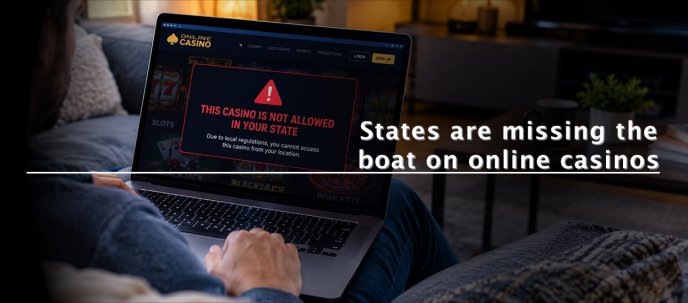
States should reconsider opening their online casino markets
iGaming Ontario just released its revenue figures and it showed that in July of this year, total online handle reached close to $10 billion, yielding revenue of about $414 million. Of that amount, only $992 million of the handle was for online sports betting, meaning that bettors in the province wager more than 10 times as much on casino gambling (including slots and table games along with a small portion on poker) than they do on sports. These figures represented a 30% increase over the prior year. Reports from the 2025 calendar year showed that the province brought in almost CAD$4 billion in revenue from private operators with almost $3.1 billion of that amount coming from online casino betting and just under $900 million on sports. If the trend holds up for the whole year, Ontario will be by far and away the largest online gambling revenue generator in North America.
One would assume that with these types of figures all states and provinces would be jumping to get on board, yet in the U.S. only nine states have legal online casino wagering and just five states have an open market for online casino gambling. The other four states have a monopoly-type system, usually overseen by the state lottery. The states with an open online casino market include Pennsylvania, Michigan, New Jersey, Connecticut and West Virginia. In comparison, 30 states plus the District of Columbia offer online sports betting.
States have tried to justify offering online sports betting but not casinos for five main reasons:
- Cannibalization to land-based casinos
- Tribal gaming compacts which give exclusive rights for Class III gambling to the Tribes, along with the IGRA which says that all Tribal gambling must take place on Tribal lands
- Concerns about increased problem and underage gambling
- Affects on low-income Americans who cannot afford to lose money on gambling
- Religious opposition to online gambling expansion
Here’s a closer look at each of these factors.
Cannibalization of land-based casinos
States argue that land-based casinos (particularly resort style casinos) employ a great number of people and those casinos would not be able to exist without money from hotel stays, restaurant revenue and ancillary revenue like show tickets and conference revenue. The states say that online gambling takes away from gambling at the casinos. While this is a viable concern for Las Vegas (although Nevada allows online gambling done on the casino property), the same has not been shown to be the case in Atlantic City and other cities with both legal online casinos and land-based casinos. There is no question that online gambling reduces land-based revenue to some extent, but those casinos usually get a license to operate online and in the case of Atlantic City at least, online gambling has been its savior.
Atlantic City
Some hotels like Tropicana were set to close due to declining attendance and wagering following the 2008 financial collapse, but they received a second wind after Governor Chris Christie signed a law legalizing online casino wagering for all Atlantic City casinos in 2013. The Tropicana management, among others, said it was only because of online casinos they once again became viable to continue operating.  The city became even more attractive when sports betting was introduced, and casinos partnered with online sports betting giants like Bet365 and William Hill to add a new revenue stream for their operations. And the city casinos looked for new revenue streams to complement their gambling including but not limited to making the hotels more luxurious, adding more entertainment options, building retail sportsbooks, creating online live dealer hubs and renting technology to digital partners. Sure online betting led to a slight short-term decline in visits, but reports showed that Atlantic City attendance was declining well before 2013 because neighboring states built large casinos like the Sugarhouse Casino and Parx Casino in Philadelphia along with Foxwoods and Mohegan Sun in Connecticut, plus racetrack slots began operating throughout the northeast. Moreover, Ontario and Quebec launched large casinos, so it was less attractive for Canadians or residents of cities like Philadelphia or Boston to make their usual treks to Atlantic City to gamble since there were other options closer by. And the same held true for Michigan.
Michigan
Revenue was almost $1.4 billion at the three commercial Detroit casinos just prior to covid (around the same time online gambling was legalized in the state), but visits and gambling to those casinos has remained fairly stable, while revenues for the casinos boomed thanks to online casinos. And for the numerous native casinos in the state, the loss of land-based revenue on the reserves has been insignificant, while overall revenues for the Tribes has skyrocketed thanks to the rule passed in the state that allowed them to partner with commercial digital entities like DraftKings. So for the Tribes the ability to offer casinos online has been a saving grace.
Land-based casinos are different
The reason there hasn’t been a huge cannibalization is that online casinos and land-based casinos are viewed differently. Numerous surveys conducted in the states over the years showed that when people go to a casino they view it as a day or night out and a form of entertainment like going to a movie or a horse racing track. The requirement to get ready and drive to the location is almost always a planned outing while online gambling, is often an impulse decision brought on mostly by boredom and wanting something to do other than watching TV. While it’s true people only have so much disposable income, most survey respondents indicated they budget for the two forms of gambling separately.
Tribal gaming compacts and the IGRA
There’s no question this is an issue in most states. Tribes have at least some influence on gambling if not full control of Class III gambling due to compacts, and they want to protect their monopolies. and land-based revenue. And the IGRA states that all gambling to be legal under the law must occur exclusively on Tribal lands, which would disallow online gambling elsewhere. But as has been demonstrated in Michigan and more recently in Florida, there is always a way to circumvent the restriction if states choose to do so. Michigan treats Tribal and commercial gaming differently but allows any online commercial entities to operate if they partner with a land-based casino. 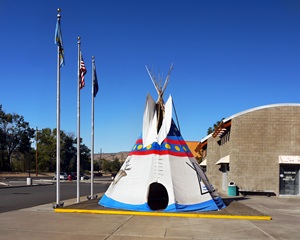 Consequently, the Bay Mills Tribe located in the northern part of Michigan near Lake Superior have partnered with DraftKings, which pays the Tribe a percentage of the online revenue and a set of fixed operator fees. DraftKings also runs a physical sportsbook at the casino. Similarly Bet365 has partnered with Little Traverse Bay Bands of Odawa Indians, Caesars has partnered with the Sault Ste. Marie Tribe of Chippewa Indians that runs Kewadin casinos, BetFanatics (after taking over PointsBet) has partnered with Lac Vieux Desert Band of Chippewa Indians that runs the Northern Waters Resort Casino, and BetRivers has partnered with the Little River Band of Ottawa Indians who run the Little River Casino resort.
But has this hurt attendance at the casinos? Not if Bay Mills is an indication. That casino just finished a renovation that increased their hotel capacity from 138 rooms to 273 rooms due to the overwhelming demand to stay at the hotel and they increased their gaming space to 600 slots and tables. If the Tribe saw that its DraftKings partnership was creating less interest in the hotel they wouldn’t be expanding. While the Tribes aren’t required to release any financial figures the same way commercial casinos do, all indications are that these partnerships have increased their revenue greatly while having little effect on land-based casino visits or land-based revenue.
And in Florida, after a hard-fought battle between the state, which signed a compact with the Seminole Tribe, and commercial entities who wanted the compact revoked, the courts ruled in the end that sports bets can be taken anywhere in Florida by agents of the Seminole Tribe as long as the bets are processed on servers located on Tribal lands. And while the state still doesn’t allow online casino wagering, the Hard Rock app in the state run by the Seminoles has introduced a slot like digital game that emulates slots but is designated as sports betting because it is based on past motor racing events. The Seminoles have asked to expand the options to casino betting and there is a consensus that it is only a matter of time the state grants the Seminoles the right to offer online casinos on the Hard Rock app everywhere except Miami-Dade county where commercial casinos have exclusivity, although that may require a referendum.
Concerns about increased problem and underage gambling
The concern about underage gambling has been present ever since John Kyl introduced his gambling prohibition act in 1997 when he said a kid would “steal his parent’s credit card, click the mouse and lose the house.” It was laughed off then as it is now. Sophisticated software with strict KYC requirements, betting limits, and compliance officers assure this could never happen. There is no question that children are far more exposed to gambling now than ever. but that is driven by sports betting and the constant ads on TV featuring celebrities. There is no real indication that underage bettors are able to bet online in significant numbers, thanks to the large number of KYC rules put in place by casinos and identification requirements like a driver’s license matched to a selfie, and there is still quite a prevalence of underage betting at land-based casinos that is often overlooked due to fake IDs and lazy security. As for problem gambling, the figure is increasing but that is true for land-based betting, as well as sports betting. To help with this, all online casinos have implemented vigorous RG rules and there are people hired by the online casinos whose sole job is to spot and stop anyone that appears to be betting erratically. Problem gambling is a concern, but this is nothing new and long pre-dates online casinos. Gambling in its nature can be addictive, and that goes not just for online gambling but also for land-based betting, horse racing and lotteries.
Effect on low-income Americans who cannot afford to lose money on gambling
Again, this is a concern, but it really is no different than low-income families who spend money on alcohol, tobacco or other forms of entertainment they struggle to afford. As a famous Libertarian told me one time in an interview “I’m proud to live in a country where I can throw away my money on what I want. I’ll deal with the consequences myself. It’s not the state’s job to be my nanny.” Nobody wants people spending money on what they can’t afford, but it’s a reality of life and the last I checked there are no restrictions in the United States that dictates how anyone can spend money on, even if it means using a welfare check. The government does put in some safeguards such as not allowing SNAP benefits to be used for anything other than food, but when it comes to other expenditures there’s really nothing a government can do. And if money is used for gambling or any other vice then it’s a trade-off between civil rights and protecting people from themselves. Brazil has put in a rule that requires gambling companies to check their welfare rolls and block anyone on those lists from setting up an account. But even in that country, civil rights groups have said it’s an invasion of privacy and they are trying to get the law changed. There is nothing requiring land-based casinos or lottery retailers to ask for proof they can afford to gamble and there is nothing requiring convenience stores to ask for proof the person can afford it when they buy cigarettes or alcohol.
There is also quite a bit of hypocrisy when it comes to this issue. When someone is shown on TV that wins the lottery, and it’s revealed they are unemployed or on welfare, the win is almost always celebrated by the lottery corporation and the stations because someone was able to go from rags to riches and achieve the American dream. But if the same person wins a jackpot at the casino they are often taunted as being reckless.
Most experts worldwide agree that the best deterrent for anyone who can’t afford to gamble, as well as for people who have a gambling problem, is to ban credit cards for gambling. It’s been done in the UK and many banks in North America forbid it. If money needs to come directly from a player’s bank account and not credit then it is far more likely the person will think twice before depositing.
Religious opposition to online gambling expansion
The Catholic Church, which is the largest denomination in the U.S., has no objection to gambling and often hosts bingo nights. Moreover, there is nothing in the Bible that forbids gambling. The reason many states with a Protestant majority oppose gambling is a carry-over from the Puritan movement that was active in England in the 17th century. The Puritans brought that belief system to the U.S. feeling that people needed protection from themselves including gambling, alcohol and anything addictive. In fact the only religion that expressly forbids gambling is Islam, although some Muslims will gamble and just don’t talk about it.
Moreover, many Protestants hail President Trump as a roll model, even though Donald Trump made his early fortune through casinos, has publicly stated that he has no objections to gambling, and Trump Media and Entertainment is operating a Prediction Markets site through Coinbase.
The bottom line is that religious concerns should not be a consideration when deciding whether to legalize online casinos or not.
Missing out on revenue
That said, just how big is the online casino market and how much money are the states losing out on? Let’s take a look at the numbers for the last completed calendar year for the three largest states which have online and land-based casino gambling.
New Jersey: Revenue from online casinos was $2.91 billion and revenue from land-based casinos was $2.89 billion. The tax rate in 2025 was 8% on land-based casinos and 15% for online casinos (going up slightly for both this year), representing tax revenue to the state of $436.5 million in revenue to the state from online wagering and $231.2 million in tax revenue from land-based revenue. Tax revenue from sports betting was about $209 million.
Pennsylvania: Revenue from online casinos was $2.8 billion and revenue from land-based casinos was a little over $3.3 billion. The tax rates were variable based on game type but total revenue to the state from online gambling was over $1.2 billion and about $1.5 billion from land-based casinos. Revenue from sports betting in comparison was only about $217 million.
Michigan: Revenue from online casinos was about $598 million and revenue from land-based casinos was about $103 million. The tax rate for land-based casinos in Detroit is 18% and the tax rate for online casinos varies from 20% to 28% based on the total handle. Sports betting only brought in tax revenue of about $36 million.
Therefore, it is evident, states that have both internet and land-based casinos are doing much better than those with only land-based casinos, and it is almost illogical not to at least consider legalization of online casinos. There is little proof that online casinos are really cannibalizing substantial revenue from the land-based casinos and while sports betting is all the rage, the amount that is bet on that in comparison to casinos is minute. Sports betting is still a generally male dominated activity among Millennials, Gen X and Boomers while casino gambling appeals to both sexes at all age levels.
Food for thought
Just think about this. The state of New York brought in $1.3 billion in tax revenue for 2025 thanks to their 51% tax rate on sports but if they had online casinos as well, which when averaged out is almost six times as large as sports betting, then the revenue from online casinos then even at the suggested 35% rate by Senator Joseph Addabo, would yield an additional $5.5 billion in tax revenue. Those figures can’t be overlooked and it’s clear that the 21 states with legal online sports betting but not legal online casino betting are doing themselves a disservice by at least not looking at ways to include it as an option with online sports betting.
So it’s time for all states to reconsider offering online casino betting. Sure there are concerns including the Tribal agreements, but there are tens of billions of dollars being left on the table that can be used for infrastructure, education and healthcare. And for the Americans who want to bet online but can’t do so legally, they still have offshore options. And I know numerous people in Illinois, Texas and California who are using them without issue.
Read insights from Hartley Henderson every week here at OSGA and check out Hartley's RUMOR MILL!
















Please login or sign-up to add your comment.
Comments (0): Subscribe by Email
There are no comments yet.
<< prev - comments page 1 of 1 - next >>